
 Published: 2026-03-31
The 2026 Shanghai International Cleaning Technology and Equipment Expo (CCE) opened grandly on March 31. As a leading player in embodied service robotics, Keenon Robotics showcased its mature KLEENBOT series and unveiled major technology upgrades for the first time: AI Inspection and a brand-new Self-Cleaning Station.
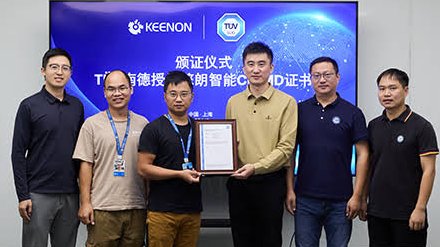
Drawing on real-world cases from its scaled global deployment, Keenon gave the industry a comprehensive look at its innovation capabilities and overall strength in commercial cleaning—from products to systems, from single points to full-scale operations—and was honored with the cleaning industry's "Craftsmanship Award." The adorable cleaning robots turned heads among passersby, the booth drew a steady stream of visitors, and the demo area attracted considerable attention.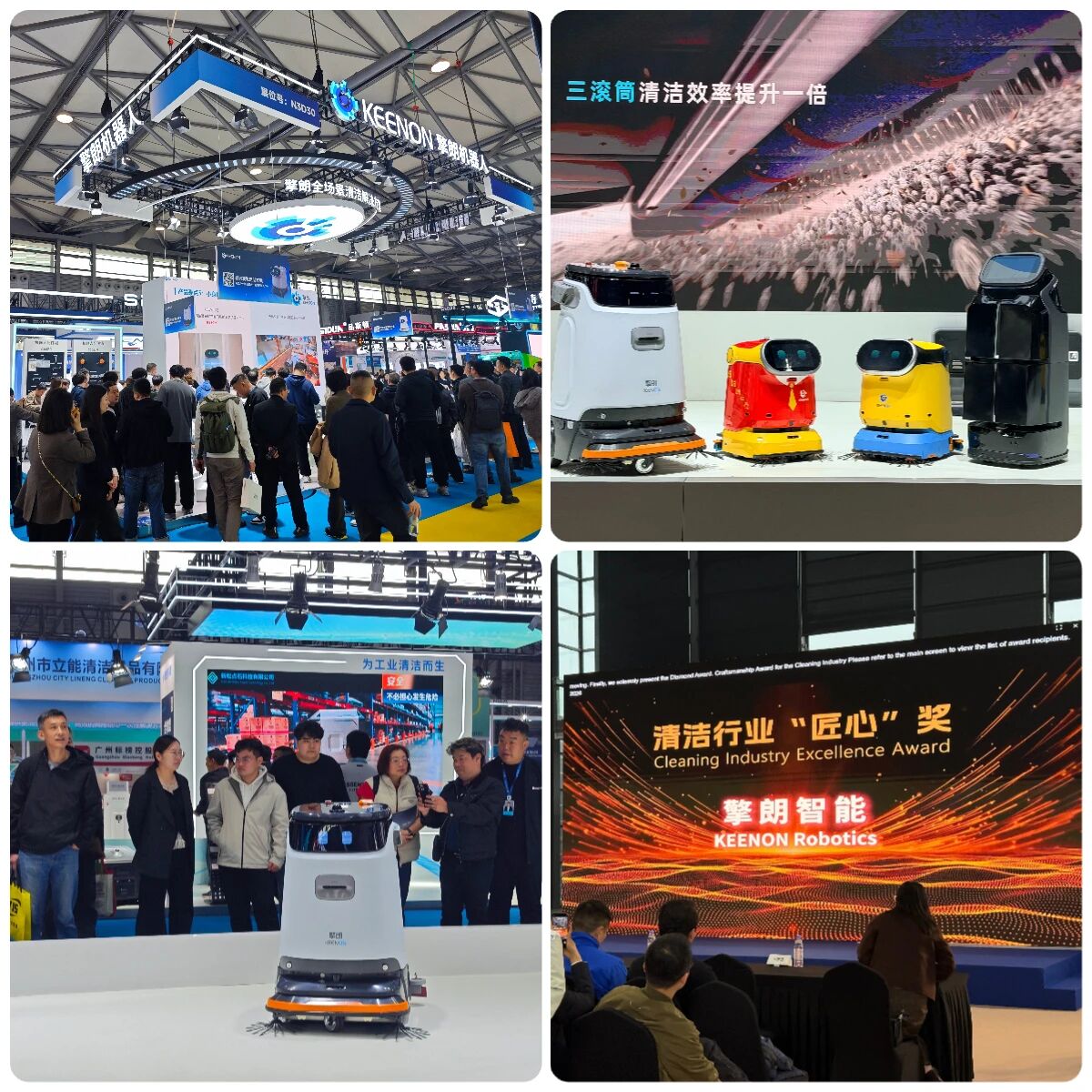
Technology Upgrades: Deep Iteration Around Real Operational Needs
This round of key technology upgrades is not about optimizing a single feature. Rather, it represents Keenon's systematic response to the core pain points of commercial cleaning scenarios accumulated through large-scale global deployment—making robots better at reading their environment and more effective at saving manpower.
AI Inspection:
Doubling Cleaning Efficiency with Precision
Through multi-sensor fusion and AI algorithms, AI Inspection gives robots the ability to proactively spot stains. Traditional cleaning robots typically cruise along predetermined routes without adjusting their movement, whereas AI Inspection equips robots with sharp eyes and an intelligent mind—much like a human.
Beyond precise recognition, the system enables true autonomous inspection. With no manual supervision required, robots can identify common dry and wet waste such as coffee spills, standing water, and paper towels, intelligently switch cleaning modes, and plan the shortest path to clean—covering areas of 5,000–10,000 square meters. This delivers "go where it's dirty, leave it spotless," keeping floors consistently clean while saving significant manpower hours previously spent on inspection.
Self-Cleaning Station:
Fully Automated Maintenance and Recharging
The workstation's self-cleaning system further completes Keenon's unmanned cleaning loop. Previously, cleaning robots required manual draining of wastewater and emptying of debris after completing tasks; now, the workstation automatically handles body washing, wastewater treatment, and waste collection once the robot returns, saving users manpower.
During cleaning, the workstation uses clean water to thoroughly wash core components such as scrubbing brushes and squeegees, significantly reducing the frequency of manual disassembly and cleaning. It also features fully automatic water filling and drainage as well as detergent replenishment—all without manual operation. After completing tasks, the robot autonomously returns to its docking station for recharging, ensuring uninterrupted cleaning operations. The launch of this system marks another step toward truly unmanned cleaning for Keenon's solutions.
Industry Insights:
Sharing Practices Around the Transformation of Property Services
At the concurrently held "2026 China Property Industry High-Quality Development (Shanghai) Summit and E-House C10 China Property Industry Strategy Summit," Fang Yijun, Head of Keenon's Cleaning Division, joined the roundtable forum "AI and Robots Reshaping the Property Service Ecosystem" and shared insights on intelligent cleaning based on deployed projects.
Fang Yijun noted that Keenon robots are now widely used in property scenarios including office buildings, commercial complexes, transportation hubs, hospitals, factories, and large public facilities, focusing on high-frequency repetitive tasks such as floor scrubbing and dust pushing. By outputting data on coverage rates, cleaning mileage, and consumables, Keenon is helping property management move from experience-driven to data-driven operations. As robots enter the workplace, staff roles are shifting from repetitive manual labor to equipment management, exception handling, and refined coordination—accelerating the property service industry's transition from a "numbers game" to a new era of "human-robot collaboration and intelligent operations."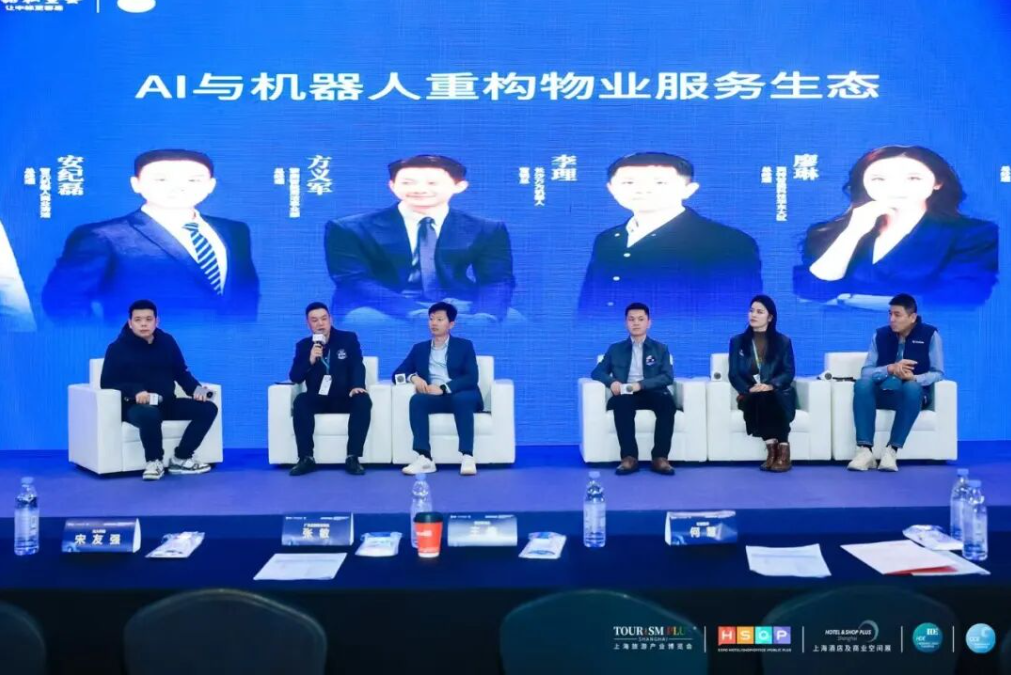
Global Deployment and Multi-Robot Collaboration:
Proof of Strength in Scaled Deployment
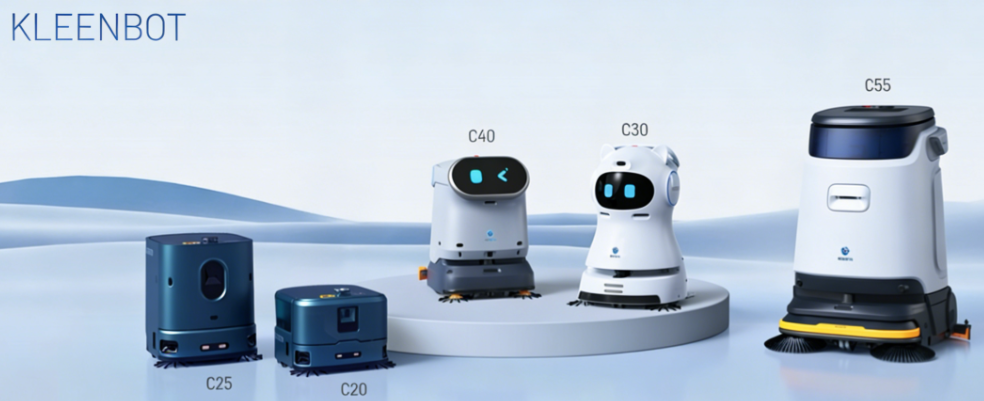
At this year's CCE, Keenon also presented a systematic showcase of its cleaning robot matrix addressing diverse property scenarios. Keenon has now built a cleaning robot series comprising the C20, C25, C30, C40, C55, and other models, covering needs ranging from small office spaces and retail stores to large commercial complexes, transportation hubs, hospitals, and industrial scenarios.
Beyond technology upgrades, Keenon also highlighted the tangible results of its scaled delivery at CCE. To date, Keenon has deployed more than 100,000 service robots across over 60 countries and regions and more than 600 cities worldwide, covering major commercial scenarios including hotels, commercial complexes, hospitals, airports, restaurants, and factories, and has accumulated extensive cross-regional, cross-scenario large-scale system delivery experience.
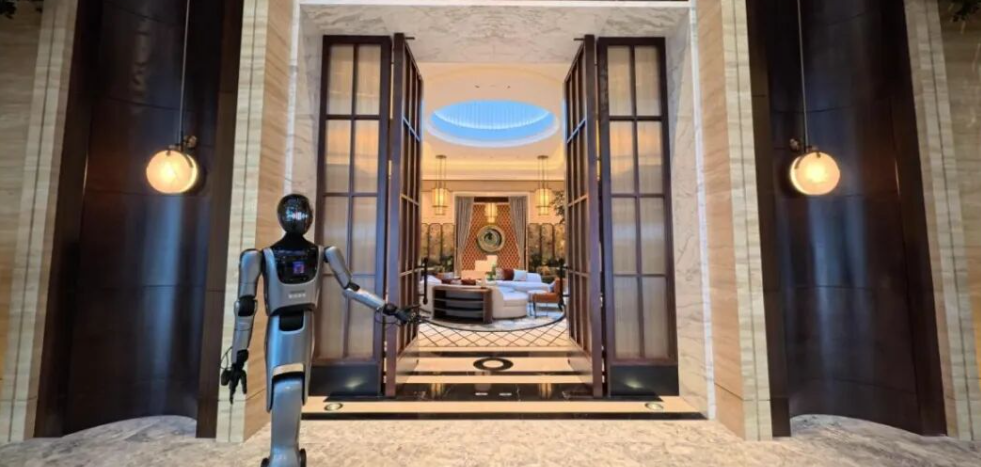
Keenon has also built mature deployment experience in multi-robot collaboration. At Shangri-La Traders Hotel, for example, Keenon has deployed general-purpose humanoid robots alongside specialized robots—cleaning, delivery, and handling robots—to build a service system covering public area cleaning, supply delivery, luggage handling, and greeting interactions. Under unified scheduling, different types of robots divide tasks and collaborate, improving hotel operational efficiency and service responsiveness while validating the practical value of the "general-purpose + specialized" collaboration model in complex commercial scenarios.